


OFFICE UPDATE
We are still in the throes of the “facelift” of the building façade. Every day is an adventure. Work is expected to be completed by the end of the year.
Our software update is complete, but as expected, there have been some complications. Most of these have to do with speed of responsiveness and prescribing. For instance, it wiped out all the patients’ preferred pharmacies. We are working with our software vendor to get these resolved.

I just returned from the fall clinical meeting of the Texas Society of Medicine, formerly know as the Texas Club of Internists in Santa Fe. Topics ranged for nutrition to preventive cardiology to physician wellness. It was great to get together with colleagues from around the state and exchange ideas.
I will be also making site visits for the Nancy Smith Hurd Foundation. We meet twice a year and hear presentations from Bexar County nonprofits and make visits to some of them who have applied for grants. It’s a great way of learning the many needs in our community. We award just under $5 million a year in grants annually.
MEDICARE ENROLLMENT
It’s that time of the year again when Medicare patients can change their plans. About half of Medicare enrollees are in Medicare advantage plans which function like PPO’s or HMO’s.
If you select one of these plans, you need to make sure that we are listed as providers. If not, we cannot order tests or refer you to other physicians. They may be a good deal financially but can limit your access. This is illustrated by an article in JAMA.
Medicare Advantage Enrollment and Access to Kidney Transplant After the 21st Century Cures Act
- Question Among Medicare beneficiaries with end-stage kidney disease, how did kidney transplant and wait-listing rates compare between Medicare Advantage and traditional Medicare in the 3 years following the expansion of Medicare Advantage eligibility under the 21st Century Cures Act?
- Findings In this cohort study of 630 848 beneficiaries, Medicare Advantage beneficiaries had lower kidney transplant rates (2.51 vs 4.60 per 1000 person-months) and incident wait-listing rates (3.05 vs 4.64 per 1000 person-months) than traditional Medicare beneficiaries.
- Meaning Medicare Advantage enrollment was associated with substantially lower rates of kidney transplant and wait-listing, highlighting the need for policy oversight to ensure access to this crucial treatment among the rapidly growing Medicare Advantage
- Abstract
- Importance Among patients with kidney failure, kidney transplant is associated with better survival and quality of life compared with maintenance dialysis. The 21st Century Cures Act expanded Medicare Advantage eligibility to individuals with end-stage kidney disease (ESKD), with limited evidence about access to transplant in Medicare Advantage plans.
- Objective To compare kidney transplant and wait-listing rates between Medicare Advantage and traditional Medicare beneficiaries with ESKD in the first 3 years after the 21st Century Cures Act.
- Design, Setting, and Participants Retrospective cohort study of Medicare beneficiaries aged 18 to 74 years with ESKD who had not received kidney transplant in the prior 3 years from January 1, 2021, through December 31, 2023.
- Exposure Enrollment in Medicare Advantage vs traditional Medicare.
- Main Outcomes and Measures The primary outcome was kidney transplant. The secondary outcome was incident (new) wait-listing. Models adjusted for demographic characteristics, dual Medicare-Medicaid eligibility, duration of ESKD, socioeconomic sta
- tus, and hospital referral region.
- Results The study population included 630 848 Medicare beneficiaries with ESKD (mean age, 57.9 [SD, 11.0] years; 40.9% female; 35.2% Black; and 19.4% Hispanic). Over 14.8 million person-months, Medicare Advantage beneficiaries had lower transplant rates than those in traditional Medicare (2.51 vs 4.60 per 1000 person-months; adjusted rate ratio [aRR], 0.71; 95% CI, 0.69-0.72). Absolute differences were widest among the youngest beneficiaries (aged 18-44 years) and were stable across calendar years (aRRs: 0.71 [95% CI, 0.68-0.73] in 2021; 0.70 [95% CI, 0.68-0.73] in 2022; and 0.70 [95% CI, 0.68-0.72] in 2023). Incident wait-listing was also lower in Medicare Advantage (3.05 vs 4.64 per 1000 person-months; aRR, 0.77; 95% CI, 0.75-0.78). Among beneficiaries wait-listed at baseline or placed on a wait list during observation, Medicare Advantage enrollees had lower transplant rates (16.59 vs 20.85 per 1000 person-months; aRR, 0.91; 95% CI, 0.90-0.92)
- Conclusions and Relevance In the first 3 years following the 21st Century Cures Act, Medicare Advantage beneficiaries with ESKD had substantially lower transplant and wait-listing rates than traditional Medicare beneficiaries. Policy oversight may be needed to monitor access for this critical, high-value treatment for kidney failure among the rapidly growing Medicare Advantage population.
FLU VACCINE
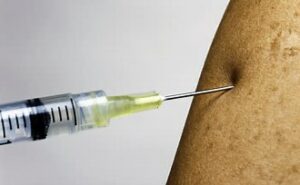
Speaking of vaccines, I was shocked to read the following article:

Texas Pediatricians Face Paxton Investigations for Vaccinating Children
Ken Paxton, the Texas attorney general and Republican Senate candidate, has alleged a sprawling profit-driven conspiracy. Pediatricians say the accusations are an attempt at intimidation.
Reporting from Texas
Oct. 5, 2026
It was a bustling Monday morning at a little pediatrician’s office in central Texas. Children with rashes, fevers and runny noses cycled through exam rooms decorated with butterflies, planets and colorful maps. The doctor, who had been treating kids in the community for 20 years, was delighted when a woman she had cared for as a child came in with her newborn.
Until recently, she had planned to continue her practice for years to come. But this year, she has begun to reconsider amid the stress and legal costs of defending herself in a statewide investigation by Ken Paxton, the attorney general of Texas and Republican candidate for the U.S. Senate, who has accused doctors, drug companies and insurers of conspiring to push parents into vaccinating children.
She agreed to be interviewed and allowed a reporter to visit her practice but asked to be identified by her middle name, Rachel, to protect her from retaliation.
In December, Dr. Rachel received a letter from the attorney general’s Consumer Protection Division demanding her vaccine purchase records over the past 10 years. “The division believes that you are in possession, custody or control” of material, “involving potential misleading or deceptive acts regarding incentives associated with the administration of childhood vaccines,” it said, adding that such acts could be in violation of the state’s deceptive trade practices law.
The letter also requested her practice’s vaccine policy, and said that it would not be sufficient to cite the childhood vaccine schedule recommended by the Centers for Disease Control and Prevention.
Mr. Paxton has also implicated the nation’s largest organization of pediatricians, the American Academy of Pediatrics, in the alleged conspiracy over the workaday task of protecting children from polio, measles, meningitis and more than a dozen other dangerous and sometimes life-threatening diseases.
“I will ensure that Big Pharma and Big Insurance don’t bribe medical providers to pressure parents to jab their kids with vaccines they feel aren’t safe or necessary,” he said when announcing the investigation in January, describing his efforts as working “alongside President Trump” and Health Secretary Robert F. Kennedy Jr.
“Together, we will Make America Healthy Again,” he said, using the rallying cry of a movement that helped elect Mr. Trump and propel Mr. Kennedy into the top health position in the federal government.
In many ways, pediatricians, among the lowest-paid specialists in medicine, make for an unlikely target. But they have become a focus in what has become a wide-ranging campaign to raise doubts about vaccination, part of a 20-year quest for Mr. Kennedy that some of his political allies have joined.
The efforts have gained steam despite decades of evidence of the effectiveness of vaccines. More than 1.1 million deaths, from diseases like diphtheria, hepatitis B and measles, were prevented by childhood vaccines in the United States from 1994 through 2023, according to an estimate from the C.D.C.
Unlike many organizations that have drawn fire from the Trump administration and its surrogates, the 67,000-member American Academy of Pediatrics has not retreated. It has sued the Trump administration over policy changes and grant cancellations, with some success so far.
“Everybody thinks of pediatricians as these mild-mannered people who have animals on their stethoscope and would not fight their way out of a bag,” said Dr. Kathryn Edwards, a professor of pediatrics at Vanderbilt University who helped develop a vaccine against a deadly bacteria, Haemophilus influenzae, or HIB.
Attorney General Ken Paxton of Texas posed for a photo with Lt. Gov. Dan Patrick at Republicans’ midterms convention in Dallas last month.Credit…Shelby Tauber for The New York Times
In August, Mr. Paxton said he was starting an investigation specifically into the American Academy of Pediatrics, accusing the organization of “deceptively promoting childhood vaccines for financial gain.” His office has served the academy with an extensive document demand.
“This is another attempt at intimidation,” Dr. Edwards said, “but they’re not being intimidated because their moral core is about the well-being of children.”
In a statement, the academy said that its vaccine advice is “rooted in decades of peer-reviewed science” and that the “‘investigation’ serves only to undermine public health, sow confusion and put more children at risk of preventable disease.”
Mr. Paxton’s office did not respond to a request for comment. In the past, his office has sued federal officials over vaccine mandates and Pfizer claiming that the company overstated the efficacy of its Covid vaccine.
It is unclear why he opened this investigation, though some people in Texas have speculated that he began it to court Mr. Trump’s endorsement in a competitive primary race (which he eventually received) or to appeal to vaccine-skeptical Texas voters.
“I think aligning himself with Kennedy helped him get an endorsement from President Trump, which then allowed him to win the Senate primary here in Texas,” said Dr. Heidi Russell, a pediatrician and director of the Center for Health Policy at Rice University in Houston.
So far, Mr. Paxton is the only attorney general to investigate pediatricians for vaccinating children. But a wave of vaccine-limiting bills were introduced into state legislatures this year, including some to eliminate vaccine requirements for school entry. None of those passed, but other measures were signed into law that require death reports of infants and children to list vaccines the child had recently received.
In Florida, state officials are holding a hearing this week on a proposal to remove the requirement for schoolchildren to be vaccinated against hepatitis B, chickenpox, pneumococcal disease and Haemophilus influenzae.
It is also unclear how many pediatric practices the investigation has contacted. Dr. Rachel said she did not know why the attorney general’s office targeted her tiny practice in an inquiry that he announced as directed toward the state’s “largest medical providers,” vaccine makers and health insurers. She said that responding to the demand for her records had so far cost her nearly $15,000 in legal fees, and sent her digging for receipts for $18 vaccines given a decade ago.
The document demand letter asked her to keep the inquiry private: “You are requested NOT to inform other entities of this request, as this request relates to an ongoing confidential investigation that would be jeopardized and impeded by disclosure.”
Rekha Lakshmanan, the executive director of the Texas-based Immunization Partnership, an advocacy group, said that the investigation could have a chilling effect on pediatricians, making them think twice about urging vaccinations or opening a practice in Texas.
Ms. Lakshmanan said she also worried that the publicity could accelerate the erosion of uptake of vaccines. The rates of measles and polio vaccine coverage among Texas kindergartners fell to about 93 percent last school year, from nearly 97 percent in 2019.
Adding to her concerns, a new state law made it easier for parents to get exemptions from vaccinations required for school entry, enabling them to download a form rather than order it by mail.
Mr. Paxton’s claims echoed those long made by Mr. Kennedy suggesting that pediatricians were motivated by profit to vaccinate children. “They’re pressured to follow the money, not the science,” Mr. Kennedy said in a speech posted to X last year.
Most pediatricians reject the claim that they profit heavily from vaccines as ludicrous. They note that they must pay upfront for the vaccines, refrigerate them according to federal guidelines and then haggle with insurers to cover the cost.
Prices for vaccines are far lower than the cost of many new therapies and range from about $30 per dose for a vaccine that protects against diphtheria, tetanus, and pertussis to as much as $595 for a newer antibody treatment that protects infants against RSV.
Nearly half of children’s vaccines are covered by the $8 billion federal Vaccines for Children program, which Mr. Kennedy, as health secretary, oversees. The program was created after measles outbreaks 32 years ago to ensure protection for lower-income families. Though some insurance companies offer incentives for quality care, which can include vaccinating children and doing annual checkups, pediatricians have said the sums are nominal.
In Dr. Rachel’s office, a large refrigerator contains what she estimates to be about $125,000 worth of vaccines to protect children from diseases like polio, measles and hepatitis. She supplied information in response to Mr. Paxton’s office’s request for every “reward, financial benefit, bonus, discount, return, rebate or other consideration” from a vaccine maker, giving details that included a $40 batch of cookies a vaccine maker’s representative brought to her office. She said her most significant discounts were small reductions vaccine makers gave her for paying a bill promptly.
Mr. Paxton’s office fired back with a follow-up to its 28-item document demand, dismissing some of the initial responses as frivolous or improper.
While Dr. Rachel has responded to the demands, the American Academy of Pediatrics has been actively pushing back on the Trump administration.
The academy and other public health groups successfully challenged Mr. Kennedy’s purge of an influential vaccine committee, whose members were replaced with vaccine skeptics.
In March, a federal judge ruled that the new members were unlawfully appointed and blocked the new vaccine guidelines that recommended dropping protection from six diseases. Mr. Kennedy’s office has challenged the ruling and the case is ongoing.
In another case, a federal judge ruled in January that Mr. Kennedy’s department had retaliated against the academy when it cut $12 million in grants that were used to address sudden infant death, fetal alcohol disorders and newborn hearing screenings.
Ten days later, Mr. Paxton announced his investigation in Texas.
On the same day, Children’s Health Defense, the anti-vaccine nonprofit that Mr. Kennedy founded, sued the American Academy of Pediatrics making similar claims, including of a “racketeering” scheme to “defraud” parents by asserting that vaccines were safe when questions remained unanswered. The case is ongoing.
After two rounds of document requests from Mr. Paxton’s office, Dr. Rachel is now waiting, uncertain what to expect next.
She recalled the anxiety she felt opening her own practice, leaving behind a reliable salary to cobble together the funds to stock and furnish an office, hammering together exam tables in her garage.
She built a busy practice and accounts for her successes with trinkets in her office: hand-scrawled cards, a drawing from a child that she framed and hung on the wall, and the gift of a little girl’s favorite marble. The suggestion that she was motivated by greed, she said, was maddening.
“I took it very personally,” she said, “because I take pride in what I do. It felt like it was such a slap in the face and an insult.”
Christina Jewett covers the Food and Drug Administration, which means keeping a close eye on drugs, medical devices, food safety and tobacco policy.
MULTI CANCER DETECTION TESTS
This is a question that comes up regularly. “Should I have a blood test, Galleri is the one most mentioned, for cancer detection?” Our response, so far, has been “no”. “Not ready for Primetime”, I sometimes say knowing that many younger patients don’t know what Primetime is. Here is some information from UpToDate summarizing the data around these blood tests followed by a recent New England Journal article and accompanying editorial on the subject.
Multicancer detection tests — Multicancer detection (MCD) tests have the goal of detecting cancer at early stages [44]. MCD tests analyze blood samples for molecular signals (eg, deoxyribonucleic acid [DNA], proteins) that are produced by cancer cells. Although they are intended to serve as adjuncts to standard cancer screening tests, MCDs can result in substantial downstream testing, which can be costly. A positive test result requires additional imaging and diagnostic work-up, particularly since MCD tests often do not specify the type of cancer or the organ(s) that are involved.
Although some MCD tests are commercially available and may detect cancer signals across a wide diversity of malignancies [45], their clinical utility for cancer screening remains uncertain [46]. Results from studies are generally not reflective of test performance in larger populations who typically undergo screening (ie, asymptomatic individuals in primary care). Most importantly, no studies have shown that MCD testing improves clinical outcomes, such as cancer-related deaths, particularly in comparison with existing screening methodologies [47,48]. Representative studies include:
- A prospective cohort study (PATHFINDER) performed MCD testing in a convenience sample of 6621 asymptomatic adults aged 50 years or older, 31 percent of whom had a known cancer predisposition or prior cancer (a high-risk population). A cancer signal was detected in 1.4 percent of participants, of whom 38 percent were diagnosed with cancer (true positives) and 62 percent were not (false positives) [49]. Of the true positives, 17 percent had recurrence of previous disease. The median time to diagnostic resolution was 57 days in true positives and longer (162 days) in false positives. Most participants had further work-up with laboratory tests and imaging, and procedures were done in 30 percent of participants with false-positive results and 82 percent of those with true-positive results. In this high-risk study population, the overall sensitivity of MCD testing was only moderate (29 percent), suggesting that MCD testing would need to occur in conjunction with standard cancer screening methods to be effective [48].
- A multicenter cohort study of 6238 participants in England and Wales evaluated the utility of an MCD test in adult patients who were referred for urgent investigation of nonspecific symptoms that were possibly caused by lung, gastrointestinal, or gynecologic cancers [50]. This study population was therefore not typical of an asymptomatic screening population. In this cohort of symptomatic patients, the test was highly specific (98 percent) but only moderately sensitive (66 percent). Test sensitivity was lower for early-stage cancers (24 percent for stage I cancers), and only 43 percent of all cancers diagnosed were stages I to II.
Given the limitations of MCD tests, no national organization has recommended their use for cancer screening.
Here is the latest on the subject from the New England Journal of Medicine.
Share on
Effect of Screening with Multicancer Early-Detection Test on Late-Stage Cancer Diagnosis
Authors: Peter Sasieni, Ph.D., Peter Johnson, M.D., F.R.C.P., Thomas Round, Ph.D. https://orcid.org/0000-0003-4382-1629, Jane Warwick, Ph.D., Helen Jones, B.N., Saoirse Dolly, M.B., B.S., Ph.D., Lennard Lee, B.M., B.Ch., D.Phil., +5 , and Charles Swanton, M.B., B.S., Ph.D., F.R.C.P.Author Info & Affiliations
Published September 22, 2026
N Engl J Med 2026;395:1374-1386
DOI: 10.1056/NEJMoa2505723
Abstract
Background
Whether screening with blood-based early-detection tests for multiple cancers in addition to usual care has clinical utility is unknown.
Methods
In a randomized, controlled trial conducted in England, we obtained peripheral blood from persons 50 to 77 years of age at up to three annual visits. After baseline blood collection, participants were randomly assigned in a 1:1 ratio to the intervention group (participants whose blood was tested) or the control group (participants whose blood was stored). Participants and trial personnel were initially unaware of the group assignments. The primary end point was stage III or IV cancer among 12 prespecified types of cancer, and a key secondary end point was stage IV cancer among the 12 prespecified types. The differences between the groups in the incidence rate (the number of first eligible events divided by person-years at risk) were measured after three screening rounds and at least 12 months of follow-up after the last participant’s third visit.
Effect of a Multicancer Early-Detection Test on Late-Stage Diagnosis
Results
Overall, 71,122 participants were randomly assigned to the intervention group and 71,128 to the control group. The incidence rate of stage III or IV cancer (primary end point) did not differ significantly between the groups (incidence rate ratio [intervention vs. control], 1.03; 95% confidence interval [CI], 0.92 to 1.14, P=0.63). The incidence rate ratio for stage IV cancer (a key secondary end point) after 3 screening rounds was 0.86 (95% CI, 0.74 to 1.00). Less than 1% of participants had trial-related adverse events; none were serious.
Conclusions
In this trial, we did not observe a lower incidence rate of stage III or IV cancers across 12 prespecified cancers after three screening rounds with multicancer early-detection testing plus usual care than with usual care alone. Further follow-up is warranted to assess the way in which findings for stage III or IV cancers and the between-group difference in stage IV cancers evolve over time. (Funded by Grail; NHS-Galleri ClinicalTrials.gov number, NCT05611632; ISRCTN number, ISRCTN91431511.)
Late stage cancers make more DNA than early stage cancers. That’s why these tests are not likely to do a better job of early detection. But research continues for the Holy Grail as outlined in the accompanying editorial.
A Step in the Search for the Elusive Holy Grail of Early Detection of Cancer
Author: David J. Hunter, M.B., B.S., F.Med.Sci.Author Info & Affiliations
Published September 22, 2026
N Engl J Med 2026;395:1440-1441
DOI: 10.1056/NEJMe2611312
The diagnosis of cancer at earlier stages is generally associated with improved survival. Detecting circulating tumor–derived cell-free DNA (cfDNA) is an established method of monitoring the response to therapy for many cancer types, particularly hematopoietic and metastatic cancers — which leads to the question of whether screening for cfDNA in symptomatic or asymptomatic persons could enable an earlier diagnosis if they have a cancer that could be confirmed by standard methods such as imaging and biopsy.
Several companies have multicancer early-detection products that they claim can provide such early diagnosis, but the claims are based on results from single-group studies and the integration of cfDNA analysis into the workup of patients with nonspecific symptoms or signs that suggest they might have cancer, such as unexplained weight loss or fatigue. What has been needed is a rigorous randomized trial that is large enough to establish the efficacy and operational characteristics of multicancer early-detection screening on a whole-population basis.
The NHS-Galleri trial, with results now reported by Sasieni et al. in the Journal1 provides such a large-scale test of the hypothesis. The trial was a collaboration among a company (Grail), academic investigators, and the National Health Service (NHS) in the United Kingdom. By enrolling more than 140,000 participants 50 to 77 years of age in less than 1 year, randomly assigning them to three annual rounds of multicancer early-detection screening plus usual care (intervention group) or to usual care alone (control group), and following them for 3 years, with high retention, the trial is a tour de force that will be followed with interest for years to come. In addition, the investigators managed to enroll participants almost equally across the socioeconomic spectrum in the United Kingdom — something that few large trials have been able to do — which reduced the potential loss of generalizability from recruiting the better-educated “worried well.”
The trial did not show a lower incidence in the intervention group than in the control group of stage III or IV cancers among 12 prespecified types of cancer over three rounds of annual screening (the primary end point). The investigators suggested that a slightly lower incidence of stage IV cancers in the intervention group than in the control group in the second and third rounds of screening was a signal of potential clinical utility and that further follow-up and mortality analysis over the next decade or so might be revealing. This is a first report, and most pivotal studies of cancer screening have taken many more years, or even decades, to mature.
Offsetting the findings in this trial is the fact that at each of the three screening rounds approximately 1% of the participants in the intervention group were told, on the basis of the multicancer early-detection test results, that they might have a cancer, and among these positive test results, no cancer was found in 48%. In a related article,2 the authors point out that the false positive rate is lower than that with screening programs such as mammography or colorectal cancer screening; however, the psychological effect of being told the search is on for a cancer that is likely to be at stage III or IV rather than “any cancer” needs to be considered.
The authors provide much more detail on the performance characteristics of the test in the related article.2 This multicancer test includes 12 anatomical sites, including sites such as ovary and pancreas for which population-based screening tests are not currently available. When the concept of multicancer early-detection screening was first discussed, concern was raised that a positive result would set patient and doctor off on a diagnostic odyssey guided by only the age- and sex-specific probability of the primary site. The development of methylation markers of the most likely primary site has short-circuited this journey, and in more than 90% of the cases with a positive multicancer early-detection test, the primary site was the first or second predicted site of cancer origin. The Achilles heel of this multicancer early-detection test is that it is much less sensitive to stage I or II cancers than to stage III or IV cancers, presumably because cfDNA is not present or not currently detectable in many early-stage cancers. Cancer types for which population-based screening exists are those that detect a high proportion of stage I or II tumors (e.g., breast and lung cancer screening) or do this in combination with enabling the removal of preneoplastic lesions (e.g., colorectal, skin, and cervical cancer screening). Although a shift from diagnosis of cancer at stage IV to stage III is valuable, it is of less value than detection at stage I or II, in which long-term survival, or even cure, is far more likely.
So, is this multicancer early-detection test ready for population-wide cancer screening? On the basis of these results, the answer is an unambiguous “no.” The answer is not “never,” however; further technical developments to increase the sensitivity for stage I and II cancers (if possible) would be needed, along with rigorous cost–benefit analyses.
The multicancer early-detection test may be useful in oncology clinics evaluating patients with symptoms and signs of cancer but without a clear suspected primary site.3 It might also play a role in the care of patients at very high risk for cancers for which no current effective screening program exists, such as ovarian and pancreatic cancer.
Finally, the NHS-Galleri trial was criticized by some academic oncologists for being approved without adequate consultation with the U.K. National Screening Committee and for committing NHS resources to a commercial entity, as well as for not being powered to assess cancer-specific mortality.4 It has also been suggested that the regions that participated in the trial had a small (2-day) increase in the average time from referral for cancer workup to diagnostic resolution during the first round of multicancer early-detection screening.5 The two current articles validate the wisdom of investigators at Grail and at the NHS in setting up this large-scale randomized trial and having it administered and analyzed by Cancer Research U.K. academic groups, with a publicly available protocol and transparent reporting. Without these results, the NHS and the U.K. National Screening Committee would undoubtedly have been lobbied by industry and patient advocates to introduce multicancer early-detection screening on the basis of smaller scale, nonrandomized, less-rigorous studies and powerful anecdotes. It is hard to imagine a trial of this size being conducted in the fragmented U.S. health system. All parties should be congratulated for putting an attractive concept to a rigorous test and achieving the unambiguous result that this method of multicancer early detection is not yet ready for population-wide cancer screening.
Notes
This editorial was published on September 22, 2026, at NEJM.org.
Disclosure forms provided by the author are available with the full text of this editorial at NEJM.org.
I hope you have a happy and safe Autumn.
Sincerely,
Mark L. Thornton, M.D.,F.A.C.P.


